Course · 9-1-1 Communications Testing
The Perfex Test,decoded end to end
A complete training course on the analog multi-tasking exam that emergency communications centres still use to screen 9-1-1 operators — what happens in the room, what each section measures, exactly how it is marked, and two timed practice tests to prove you are ready.
- Length
- ~45 min
- Continuous, no pause
- Delivery
- Audio tape
- Instructions read once
- Format
- Handwritten
- Pencil + answer sheet
- Seating
- 1 candidate
- In person, proctored
What it measures
Ten abilities, tested simultaneously
The Perfex is deliberately unfair to people who can only do one thing at a time. Each block below is easy in isolation; the exam scores what happens when three of them land on top of each other.
- Listening & oral comprehension
- Fast, legible handwriting
- Short-term memory / recall
- Map book & grid reading
- Index navigation & cross-referencing
- Spelling and proofreading
- Numeracy and code accuracy
- Manual dexterity
- Speech clarity (cue-card reading)
- Multi-tasking under time pressure
The room
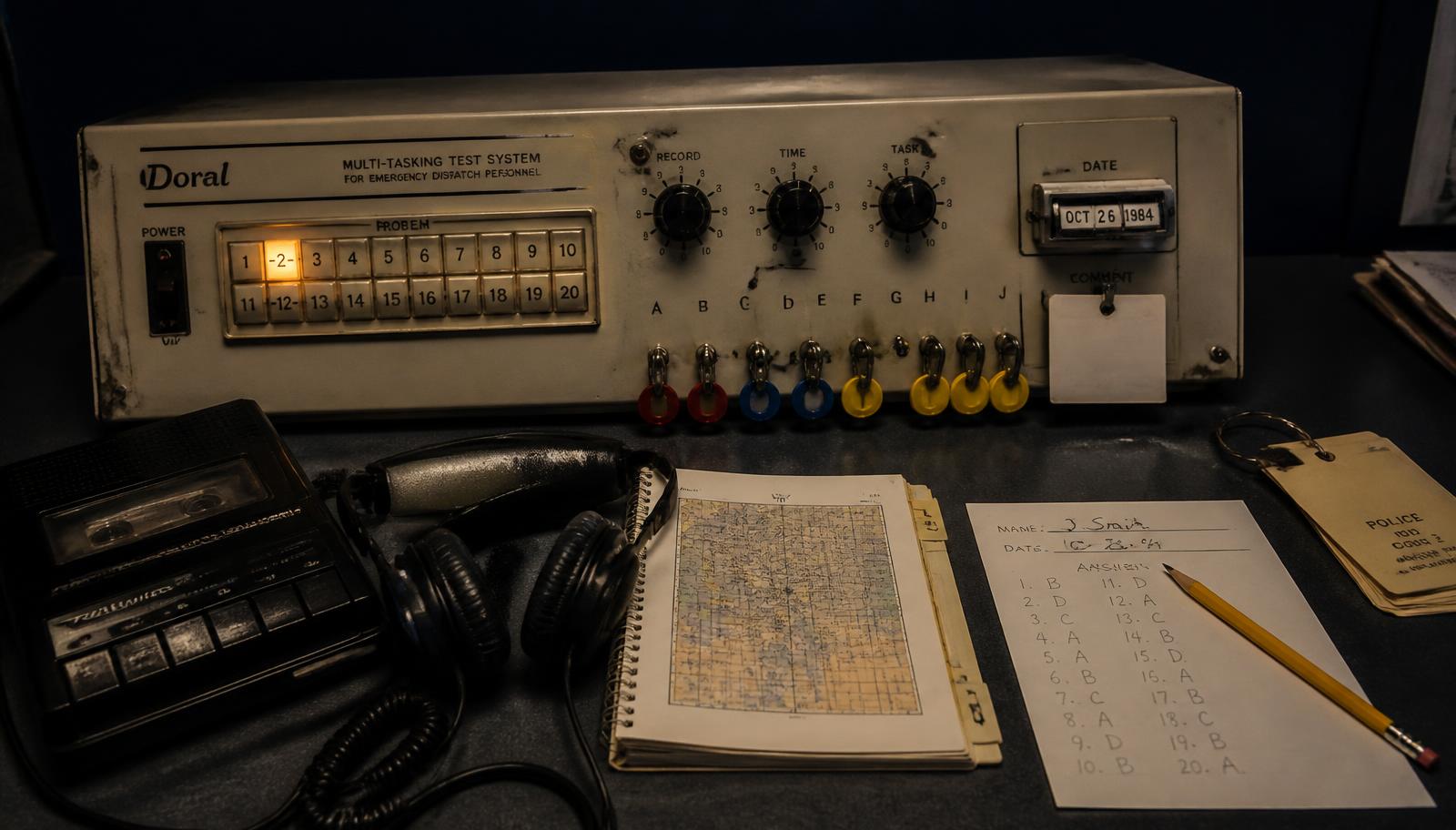
What you will be looking at
The curriculum
Six modules
Roughly 45 minutes of study — the same length as the exam. Open each module in order.
The Perfex test is a pre-employment aptitude exam used by emergency communications centres to decide whether a candidate can absorb information, write it down, look things up and operate equipment — all at the same time. It predates modern computer testing and is generally described as the precursor to CritiCall; a shrinking number of agencies still use it, either on its own or alongside a computerized test.
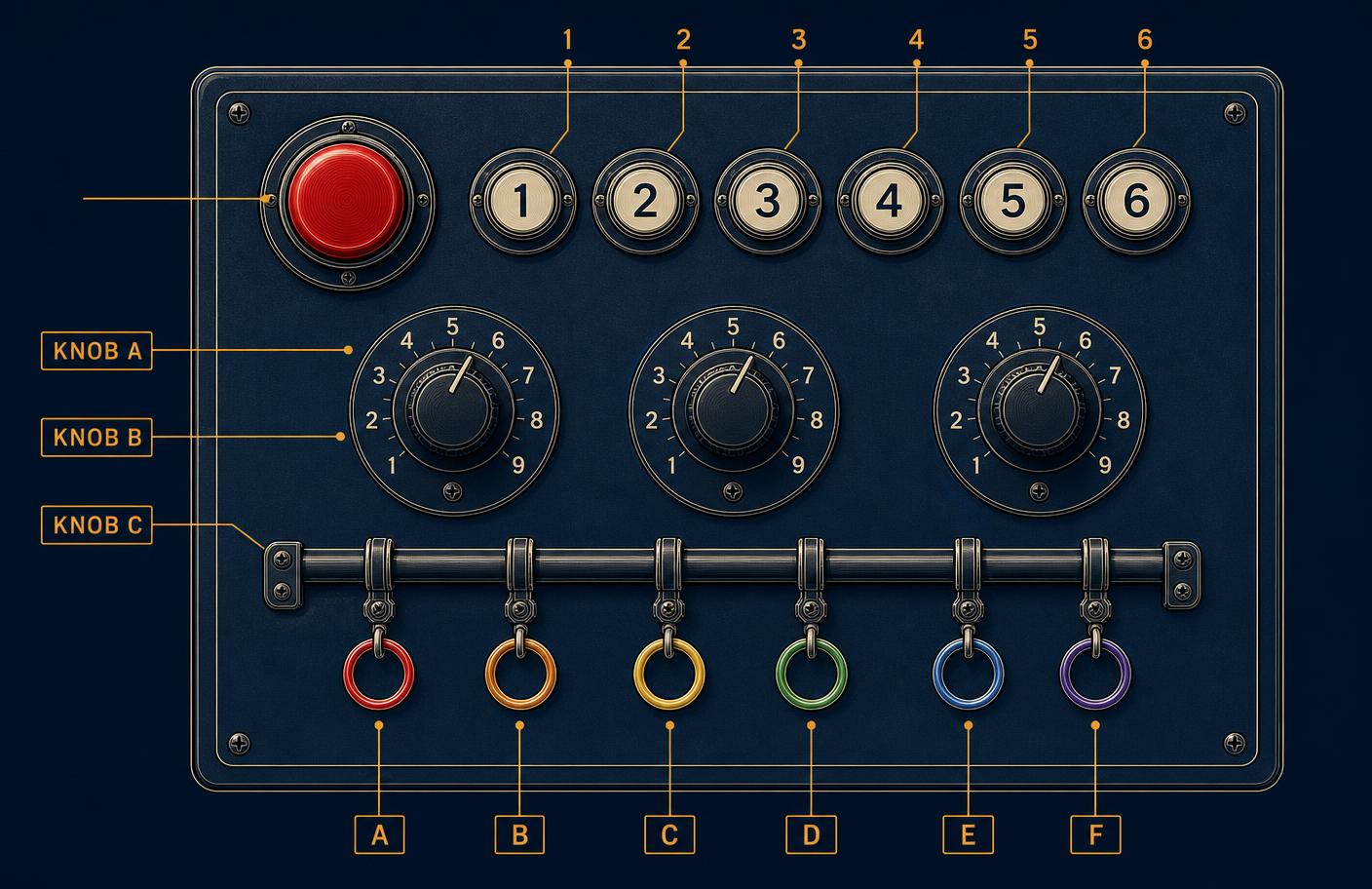
Everything is driven by a pre-recorded audio tape. Once the tape starts, it does not stop, does not repeat and cannot be paused. You sit at a desk in front of a 'Perfex multi-tasking machine' with an answer booklet, a pencil, a map book and its street index. The proctor presses play, and for roughly 45 minutes the tape reads instructions, dictates information, times you, and interrupts you with machine commands.
Because the test is handwritten and one-on-one, only a single candidate can be tested at a time and it must be done in person. Several versions exist (commonly lettered B, D, E, F, G), but the station layout and the types of tasks are consistent between versions.
Important expectation-setting: the written instructions you may have seen on a 'mock' Perfex sheet do not appear on the real sheet. The real answer sheet is mostly blank boxes and blank lines. The instructions exist only on the tape, spoken once.
- Who uses it
- Police, fire and EMS communications centres hiring call-takers, dispatchers and emergency communicators.
- Where it sits
- Usually stage 2 of hiring — after the application screen, before the panel interview and background check.
- What it is not
- It is not a typing test, not a personality test, and not a knowledge test. Nothing about police procedure is required.
Tips
- ›Confirm with the agency which test you are sitting: Perfex, CritiCall, or both. The prep is different.
- ›Ask whether you may bring your own pencils and whether the map book is provided at the station.
Worked example
One sentence, four ways to lose a point
Tape says
“Caller Amanda Reyes, that’s R-E-Y-E-S, at 1806 East Main Street. While you write that, date stamp two tags and hang them on hooks B and E.”
Correct response
- 1. Write 1806 E MAIN ST — digits first, block capitals.
- 2. Write REYES exactly as spelled.
- 3. Stamp both tags, then hang: B, then E.
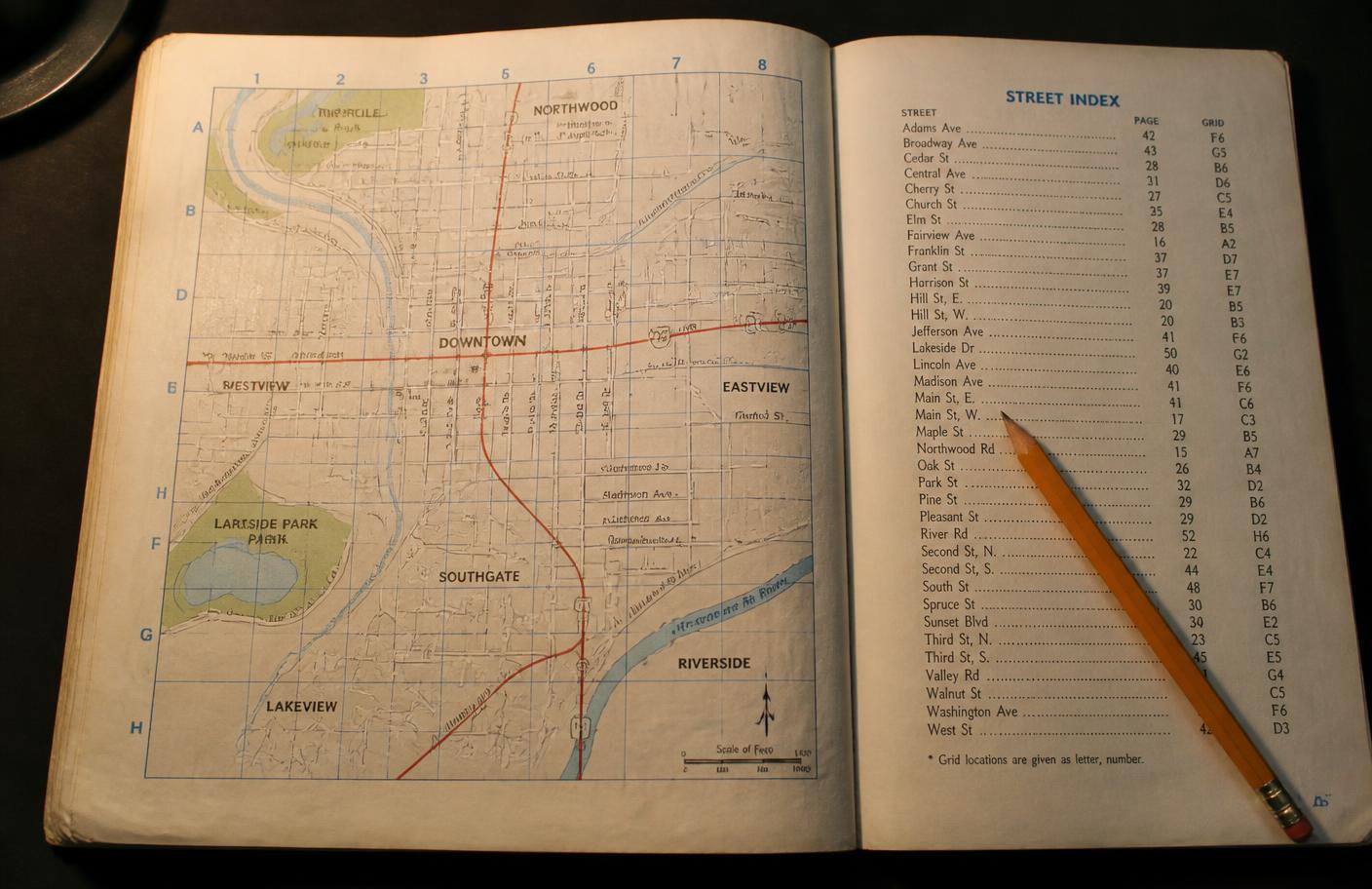
- 4. If a lookup follows, index Main St, E. — not Main St, W.
Assessment
Timed practice tests
Each test is a 15-minute continuous run. Memory items appear on screen for a few seconds and then disappear — exactly like the tape. You cannot go back, and you are scored section by section at the end.
Practice Test B
Intake, index work and machine commands
- Oral call intake
- Map index cross-reference
- Machine command
- Spelling
- Numbers & codes
- Short-term memory
- Proofreading
- Scoring knowledge
Practice Test E
Heavier memory load and combined multi-tasking
- Oral call intake
- Map index cross-reference
- Numbers & codes
- Numeracy
- Machine command
- Short-term memory
- Spelling
- Proofreading
- Combined multi-tasking
- Scoring knowledge
Glossary
Terms you will hear
- Hot shot button
- The large priority button on the Perfex console, often paired with a timed hold or a simultaneous press.
- Grid reference
- The letter-number coordinate (e.g. B5) locating a street on a gridded map page.
- Map index
- The alphabetical street list at the back of the map book giving page and grid for each street.
- Cue cards
- Printed phrase cards read aloud so the assessor can score speech clarity and pace.
- Cut score
- The minimum percentage an agency accepts as a pass; set locally, not by the test publisher.
- CritiCall
- The modern computerized successor test; many agencies have migrated to it from Perfex.
Research sources
Where this comes from
Perfex is an old, closed instrument: its publisher does not release a public technical manual or norm tables, and agencies do not publish their cut scores. This course synthesises published descriptions from 9-1-1 test-prep specialists with the consistent accounts candidates give of the sections and the equipment. Treat scoring thresholds as agency-specific.